The brain requires a continuous supply of oxygen and energy to support memory, concentration, movement, emotional regulation, and countless automatic functions. When the brain is affected by an injury, illness, reduced blood flow, or prolonged physiological stress, these processes may become less efficient. This has led researchers to investigate whether hyperbaric oxygen therapy, commonly called HBOT, could influence certain aspects of neurological recovery and cognitive performance.
HBOT is already an established medical treatment for several specific conditions, but its use for traumatic brain injury, post-concussion symptoms, cognitive enhancement, and general brain performance remains an evolving area of research. Axon Integrative Health provides a local point of context for individuals in Denver, Cherry Creek, Cherry Hills, Highlands, and Greenwood Village who are learning about oxygen-based interventions and their possible relationship to neurological function.
What Happens During Hyperbaric Oxygen Therapy?
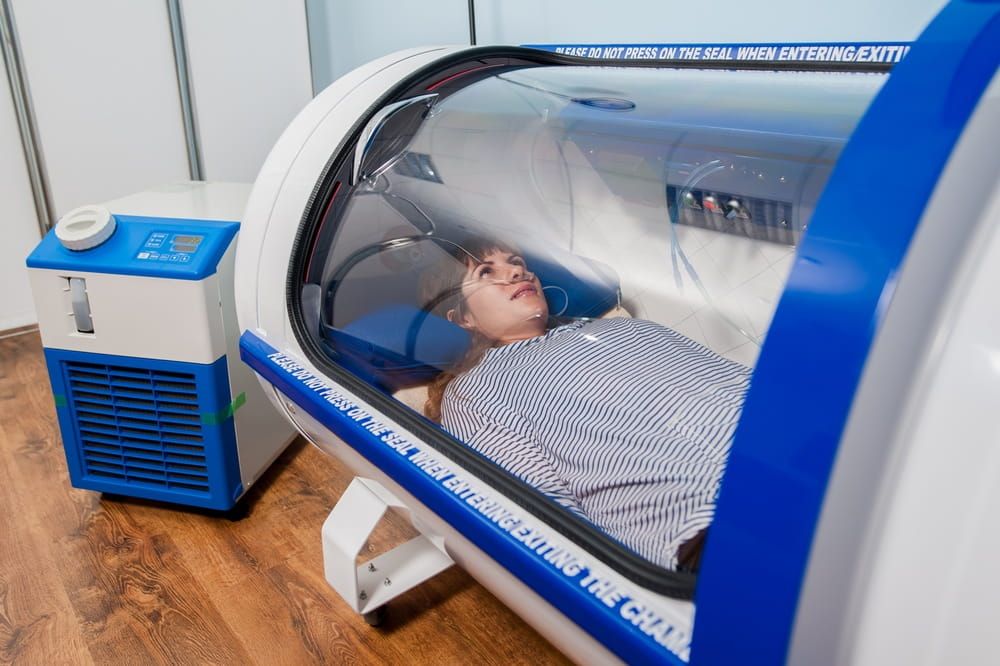
Hyperbaric oxygen therapy involves breathing medical-grade oxygen inside a chamber with air pressure higher than normal atmospheric pressure. Under these conditions, more oxygen can dissolve into the plasma and other liquid components of the blood. This differs from breathing supplemental oxygen at ordinary pressure because increased atmospheric pressure changes how oxygen is transported throughout the body.
A session typically involves gradually increasing the pressure inside the chamber, maintaining the prescribed pressure for a designated period, and then slowly returning to normal pressure. The specific pressure, oxygen concentration, session length, and number of treatments depend on the medical indication and clinical protocol. The term HBOT should generally refer to treatment delivered in an appropriate chamber under qualified medical supervision rather than casual oxygen use or unregulated wellness devices.
The physiological effects do not end when the chamber session concludes. Researchers are examining whether repeated, carefully controlled exposure may influence blood-vessel signaling, inflammatory activity, cellular metabolism, and adaptive repair processes. These proposed mechanisms are part of the reason HBOT in Denver has attracted attention in conversations about neurological recovery and human performance.
Why Oxygen Matters to the Brain
Although the brain represents only a portion of total body mass, it consumes a substantial amount of the body’s available oxygen. Neurons need reliable energy production to communicate, maintain electrical gradients, process sensory information, and coordinate movement. When oxygen delivery is disrupted, brain function can be affected quickly.
After a brain injury, the surrounding tissue may experience altered circulation, inflammation, oxidative stress, and impaired cellular energy production. Some areas may remain structurally intact but function less efficiently. HBOT research has explored whether increasing oxygen availability could support metabolically stressed tissue and create conditions that are more favorable for repair.
More oxygen is not automatically better, however. Oxygen can influence both restorative and potentially damaging biochemical reactions, depending on its concentration, duration, and the individual’s health. This is why HBOT requires appropriate screening and dosing rather than a one-size-fits-all approach.
HBOT and Recovery After Brain Injury
Traumatic brain injuries range from mild concussions to severe injuries involving bleeding, swelling, or widespread neurological disruption. Even after the acute injury stabilizes, some people continue experiencing headaches, dizziness, fatigue, memory difficulties, sensory sensitivity, sleep disruption, or reduced exercise tolerance. These symptoms may have several overlapping causes and do not necessarily respond to a single intervention.
Researchers have investigated HBOT for both acute and chronic traumatic brain injury. Some studies have reported improvements in selected symptoms, neurological measures, or cognitive outcomes, while others have found limited differences between treatment and comparison groups. Differences in chamber pressure, oxygen exposure, injury severity, time since injury, and study design make the evidence difficult to interpret as a single definitive conclusion.
HBOT should therefore not be described as a proven cure for concussion or traumatic brain injury. The current evidence is mixed, and treatment decisions should account for the individual’s diagnosis, symptoms, medical history, and overall rehabilitation plan. Educational information about concussion rehab in Denver also illustrates why brain recovery may require coordinated attention to balance, vision, cognition, autonomic function, physical conditioning, and symptom tolerance.
Possible Connections to Neuroplasticity
Neuroplasticity is the nervous system’s ability to reorganize its activity and strengthen or create functional connections in response to learning, experience, and rehabilitation. It is central to recovery after many neurological injuries because the brain may need to develop alternative strategies when an existing pathway has been disrupted.
HBOT research has examined whether repeated changes in oxygen availability may stimulate biological signals associated with blood-vessel development, cellular repair, and neural adaptation. These mechanisms are scientifically interesting, but neuroplasticity does not occur simply because more oxygen reaches the brain. The nervous system also needs meaningful input.
Rehabilitation exercises, cognitive challenges, sensory stimulation, balance work, visual training, and progressively demanding physical activities provide the experiences through which the brain practices new strategies. HBOT, when medically appropriate, should be viewed within this larger context rather than as a substitute for active rehabilitation. Oxygen exposure may create a potential biological opportunity, but training helps determine how that opportunity is used.
Cognitive Performance in People Without Brain Injury
Interest in HBOT has expanded beyond injury recovery to include memory, attention, processing speed, and healthy aging. A randomized controlled study involving healthy older adults reported improvements in certain cognitive domains after a multiweek HBOT protocol. Researchers have also studied related outcomes such as cerebral blood flow and imaging-based changes.
These findings are preliminary and should not be interpreted as proof that HBOT reliably makes healthy people smarter, more productive, or resistant to cognitive decline. Some studies have small sample sizes, narrowly defined participant groups, or protocols that may not apply broadly. Improvements observed under research conditions may also differ from the effects of occasional or inconsistent treatment.
Cognitive performance depends on many interacting factors, including sleep, cardiovascular health, physical activity, glucose regulation, stress, medication use, sensory function, and opportunities for learning. HBOT cannot compensate for chronic sleep deprivation, poor nutrition, unmanaged health conditions, or an absence of meaningful cognitive and physical activity.
Why Performance Requires More Than Oxygen
Athletic and professional performance requires the brain to process information quickly and coordinate an appropriate response. Reaction time, visual tracking, attention, balance, decision-making, and motor control must work together, particularly in fast or unpredictable environments. Oxygen metabolism supports these functions, but it is only one component of performance.
A person may feel mentally slow because of insufficient sleep, overtraining, dehydration, anxiety, inadequate calorie intake, medication effects, or a recent concussion. Increasing oxygen exposure without identifying the underlying issue may not address the true limitation. A thoughtful performance plan begins by defining what has changed and which systems may be contributing.
Targeted interventions such as neuro-cognitive training in Denver can challenge attention, processing speed, working memory, and decision-making directly. Physical conditioning, reaction drills, balance training, and adequate recovery may also be needed. Performance develops through repeated adaptation, not through a passive intervention alone.
Safety and Medical Screening Matter
HBOT is generally tolerated by appropriately screened individuals, but it is not risk-free. Changes in chamber pressure can cause discomfort or injury involving the ears, sinuses, or lungs. Temporary vision changes, fatigue, anxiety in enclosed spaces, and blood sugar fluctuations may also occur. Oxygen toxicity and seizures are uncommon but recognized risks.
Certain lung conditions, untreated pneumothorax, recent surgeries, medications, ear problems, and other medical factors may affect whether HBOT is appropriate. Fire safety is also critically important because oxygen-rich environments increase combustion risk. Medical-grade chambers require strict operating standards, trained supervision, and careful control of materials brought into the treatment area.
Anyone considering HBOT for a neurological condition should understand whether the proposed use is established, investigational, or outside commonly accepted indications. Clear expectations are especially important when treatment involves numerous sessions and significant commitments of time or money.
Setting Realistic Expectations for Brain Recovery
Neurological recovery rarely depends on one therapy. It may involve medical management, physical rehabilitation, cognitive training, vision or vestibular exercises, psychological support, sleep improvement, and gradual return to activity. The most relevant combination depends on the source of the symptoms and the systems that remain affected.
When HBOT is considered, progress should be measured using meaningful outcomes established before treatment begins. These might include headache frequency, exercise tolerance, cognitive testing, balance performance, sleep quality, work capacity, or the ability to complete daily activities. General statements about feeling better can be useful, but objective measures can provide additional clarity.
HBOT is a compelling area of study because oxygen influences metabolism, circulation, and cellular signaling throughout the nervous system. Yet enthusiasm should remain balanced with an honest understanding of the evidence. Axon Integrative Health offers local context for people across Denver, Cherry Creek, Cherry Hills, Highlands, and Greenwood Village who are exploring how neurological rehabilitation, physiological health, and performance-focused strategies may work together.
Resources
Hadanny, A., Daniel-Kotovsky, M., Suzin, G., et al. (2020). Cognitive Enhancement of Healthy Older Adults Using Hyperbaric Oxygen: A Randomized Controlled Trial. Aging.
Harch, P. G. (2025). Hyperbaric Oxygen Therapy in Moderate Traumatic Brain Injury: A Randomized Controlled Trial. Indian Journal of Neurotrauma.
Weaver, L. K. (Ed.). (2014). Hyperbaric Oxygen Therapy Indications. Undersea and Hyperbaric Medical Society.