
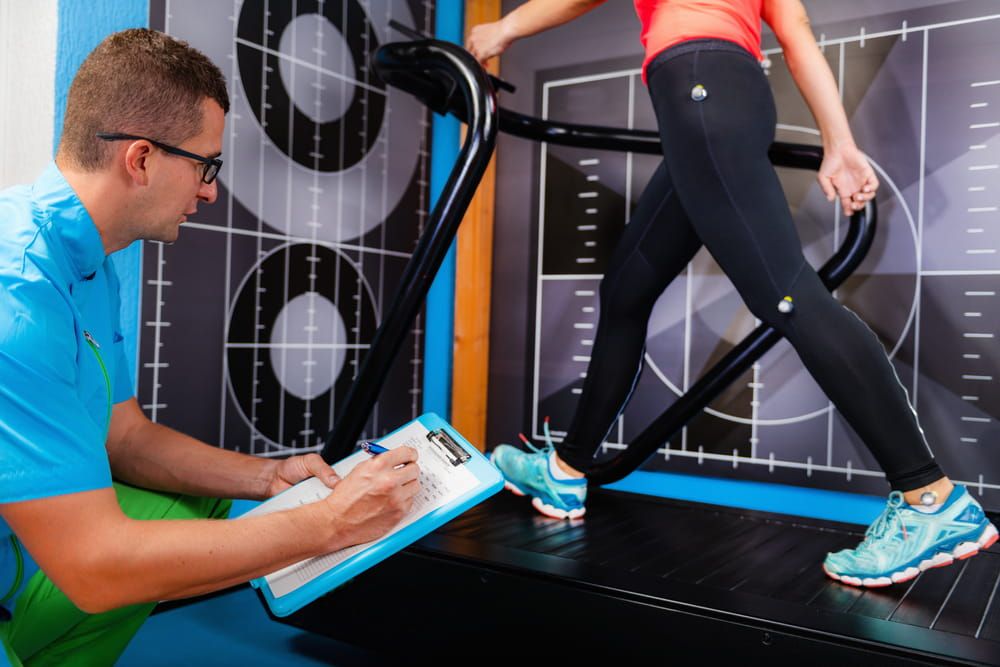
Axon Integrative Health provides a helpful point of context for people throughout Denver, Cherry Creek, Cherry Hills, Highlands, and Greenwood Village who want to understand how movement quality can influence physical resilience. Injuries are often associated with obvious events, such as a fall, collision, awkward landing, or sudden increase in training intensity. However, the conditions that make an injury more likely may develop gradually through limited mobility, poor coordination, muscle imbalances, or repeated compensatory movement.
A functional movement assessment examines how the body performs common movement patterns rather than evaluating strength or flexibility in isolation. The purpose is not to predict exactly when an injury will occur. Instead, the assessment can reveal movement tendencies that may place unnecessary stress on muscles, joints, tendons, and ligaments. Once these tendencies are recognized, exercise and training strategies can be adjusted to support safer, more efficient movement.
Looking Beyond the Location of Pain
Pain is not always located at the source of a movement problem. An individual with knee discomfort, for example, may also have restricted ankle mobility, limited hip control, or difficulty maintaining proper lower-body alignment. Similarly, recurring shoulder irritation may be influenced by restricted upper-back movement or inadequate control of the shoulder blade. Focusing only on the painful area can overlook the broader movement pattern contributing to repeated strain.
A functional movement assessment in Denver may involve observing movements such as squatting, stepping, reaching, balancing, rotating, or bending. These patterns provide information about mobility, stability, coordination, balance, and control. The evaluator may also compare the right and left sides of the body to identify asymmetries that are difficult to notice during ordinary exercise.
Movement assessments should not be treated as stand-alone diagnostic tools or guarantees of injury prediction. Research has found that composite screening scores alone have limitations, especially when they are applied without considering an individual’s injury history, activity demands, training exposure, and physical characteristics. Their greatest value may come from helping organize observations and guide individualized decisions rather than assigning a universal label of high or low injury risk.
How Compensation Patterns Develop
The body is highly adaptable. When one joint lacks sufficient mobility or one muscle group cannot control a task effectively, another part of the body often changes its behavior so the movement can still be completed. This compensation may initially be subtle and painless. Over time, however, the same altered pattern may repeatedly load tissues that were not designed to absorb the full demand.
Consider a runner whose hip muscles fatigue quickly. The knee may drift inward during each stride, while the foot and ankle work harder to maintain balance. A person performing overhead exercises may arch the lower back because the shoulders or upper spine do not move adequately. Someone with limited ankle motion may lift the heels, rotate the feet outward, or shift weight unevenly during a squat. Each compensation represents the body solving a movement problem, but the solution may become less efficient as repetition, resistance, or fatigue increases.
Past injuries can also shape movement long after pain has resolved. Following an ankle sprain, a person may unconsciously avoid loading that side. After a back injury, movement may become stiff and guarded. These protective strategies are useful during early recovery, but they may remain after the injured tissue has healed. A movement assessment can help distinguish between the original injury and the habits that developed around it.
Turning Assessment Findings Into Practical Training
An assessment is most useful when the findings lead to a focused plan. The goal is not to make every movement look identical or achieve an arbitrary standard of perfect posture. Human movement naturally varies according to anatomy, experience, sport, age, and physical demands. A practical plan prioritizes the limitations that are most relevant to the individual’s activities.
When restricted mobility contributes to compensation, techniques such as PNF stretching in Denver may be considered as part of a broader exercise strategy. When the primary concern involves coordination, stability, or movement control, corrective exercise in Denver may focus on teaching the body to perform a pattern with greater consistency. Exercises may begin slowly and under controlled conditions before progressing to heavier loads, faster speeds, or more complex tasks.
The best corrective plan is usually specific rather than excessive. A person does not necessarily need a long collection of unrelated exercises. A small number of carefully selected movements may be more effective when they directly address the findings of the assessment and are performed consistently. Reassessment can then determine whether mobility, control, or symmetry has improved and whether the exercise program should be progressed.
Preparing the Body for Real-World Demands
Movement that appears controlled in a quiet environment may change under fatigue, speed, distraction, or resistance. For that reason, injury prevention should eventually extend beyond isolated corrective exercises. The body must learn to maintain control during the situations it will actually encounter, whether that means carrying groceries, climbing stairs, working at a desk, running on uneven terrain, lifting weights, or changing direction during competition.
A recreational athlete may need to demonstrate controlled landing and deceleration before returning to cutting or jumping drills. A runner may need to maintain hip and knee alignment as fatigue develops. Someone with a physically demanding occupation may need to practice lifting, reaching, and carrying in positions that resemble the workplace. This gradual transition connects movement quality with meaningful daily or athletic demands.
Neuromuscular training programs commonly incorporate balance, strength, agility, core control, and movement technique. Evidence supports these multifaceted approaches as useful components of injury-prevention programs, although effectiveness depends on factors such as appropriate exercise selection, consistent participation, and progression over time.
Functional Assessment Is Not Only for Athletes
Functional movement assessment is often discussed in the context of sports, but movement quality matters well beyond competition. Everyday activities require the nervous system, muscles, and joints to work together. Stepping off a curb, picking up a child, reaching into a cabinet, getting out of a chair, or carrying an uneven load all require coordinated movement.
An assessment may be particularly valuable when someone experiences recurring tightness, repeated minor strains, discomfort during a specific activity, or difficulty progressing in an exercise program. It can also provide useful information before beginning a new activity or increasing training intensity. Although a movement assessment cannot eliminate all risk, it may identify modifiable factors before they become more disruptive.
People returning from an injury may also benefit from looking beyond whether pain has disappeared. Effective sports injury recovery in Denver involves restoring confidence, capacity, and movement control in addition to addressing symptoms. A person may feel comfortable during basic daily activities but still lack the strength, balance, or coordination needed for more demanding exercise.
Building a More Resilient Movement Strategy
Injury prevention is not a single test, exercise, stretch, or warm-up. It is an ongoing process that includes appropriate training volume, adequate recovery, progressive strength development, sound technique, and attention to changes in movement or discomfort. Functional movement assessment contributes to this process by making movement habits more visible.
The findings should always be interpreted within the individual’s broader situation. Previous injuries, sleep, fatigue, training frequency, work demands, health conditions, and recovery time can all influence injury risk. A low screening score does not mean that an injury is inevitable, just as a strong score does not guarantee complete protection. The assessment is one piece of a larger decision-making process.
When used thoughtfully, movement assessment can help people train with greater purpose. Instead of waiting for repeated pain to interrupt activity, they can address relevant mobility restrictions, control deficits, or compensation patterns and gradually prepare for the demands that matter most. Axon Integrative Health offers local context for individuals across Denver, Cherry Creek, Cherry Hills, Highlands, and Greenwood Village who are interested in understanding the relationship between movement quality, human performance, and long-term physical resilience.
Resources
Dorrel, B. S., Long, T., Shaffer, S., & Myer, G. D. (2015). Evaluation of Functional Movement Screen as an Injury Prediction Tool Among Active Adult Populations: A Systematic Review and Meta-analysis. Sports Health.
Moran, R. W., Schneiders, A. G., Mason, J., & Sullivan, S. J. (2017). Do Functional Movement Screen Composite Scores Predict Subsequent Injury? A Systematic Review With Meta-analysis. British Journal of Sports Medicine.
Lutz, D., van den Berg, C., Räisänen, A. M., et al. (2024). Best Practices for the Dissemination and Implementation of Neuromuscular Training Injury Prevention Warm-up Programs in Youth Team Sports: A Systematic Review. British Journal of Sports Medicine.