Your brain may only make up a small percentage of your body weight, but it is one of the most metabolically demanding organs in the body.
It needs a constant supply of oxygen, glucose, nutrients, and energy to support everything from attention and memory to movement, mood, reaction time, and decision-making.
So what happens when the brain is under more demand than usual? Maybe you’re recovering from a concussion.
Maybe you’re dealing with brain fog. Maybe your sleep has been terrible.
Maybe you’re training hard and struggling to recover.
Or maybe nothing is technically “wrong”—you simply want your brain and body performing at a higher level.
This is where IV therapy can become an interesting tool.
At Axon Integrative Health, we use IV therapy as part of a broader approach to brain health, cellular energy, recovery, and performance.
Can IV therapy improve brain health?
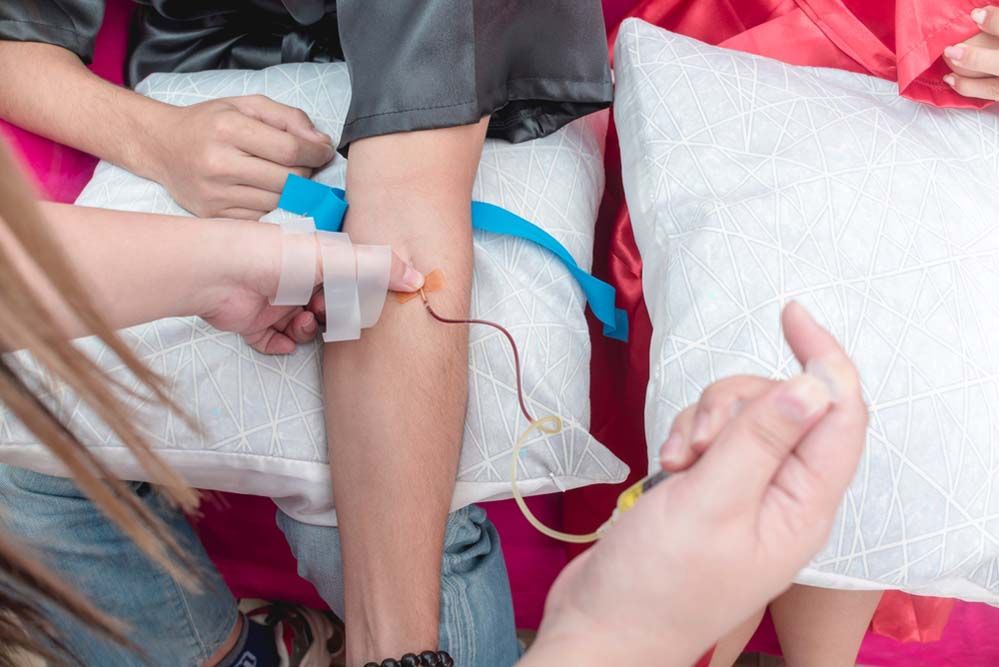
IV therapy can rapidly deliver fluids, electrolytes, vitamins, and other compounds into the bloodstream.
Depending on the formulation and the individual, IV therapy may support physiological processes involved in:
- Cellular energy production
- Hydration
- Nutrient availability
- Oxidative stress management
- Recovery
- Neurological function
- Exercise recovery
- Metabolic resilience
But it’s important to make one distinction:
An IV isn’t a shortcut to a healthier brain.
Brain health is built from sleep, nutrition, movement, cardiovascular health, stress regulation, social connection, metabolic health, and appropriate neurological stimulation.
IV therapy is one tool that may complement those fundamentals.
Why does the brain need so much energy?
Your brain is constantly working.
Even when you’re sitting on the couch, your nervous system is maintaining electrical gradients, communicating between neurons, regulating autonomic functions, processing sensory information, managing memories, and coordinating countless physiological processes.
That requires energy.
When the brain is under increased demand—such as during intense cognitive work, athletic training, illness, injury, or recovery—supporting the body’s overall metabolic environment becomes particularly important.
IV therapy for brain fog
“Brain fog” isn’t a diagnosis.
It’s a description people use for symptoms such as:
- Difficulty concentrating
- Forgetfulness
- Slower thinking
- Poor mental stamina
- Trouble finding words
- Feeling mentally fatigued
- Difficulty multitasking
Brain fog can have many potential contributors, including poor sleep, stress, medications, nutritional issues, metabolic dysfunction, inflammation, illness, hormonal factors, autonomic dysfunction, and neurological injury.
An IV won’t fix every cause.
But if hydration, nutrient availability, metabolic stress, or recovery are part of the picture, IV therapy may be one component of a broader strategy.
IV therapy after concussion
The brain’s energy demands can change following concussion, and patients may experience symptoms such as headache, fatigue, dizziness, light sensitivity, cognitive difficulty, sleep disruption, or exercise intolerance.
That doesn’t mean every concussion patient needs an IV. At Axon, we take a more comprehensive approach.
We may consider neurological function, autonomic regulation, cervical biomechanics, visual and vestibular function, exercise tolerance, sleep, nutrition, inflammation, and cellular energy.
IV therapy may then be incorporated when it makes sense.
The goal isn’t to “IV away” a concussion.
It’s to support the biological environment while the nervous system is being appropriately rehabilitated.
IV therapy for athletes and performance
Performance isn’t only about muscles.
Your brain controls movement, reaction time, coordination, decision-making, motivation, attention, and pacing.
If you’re training hard, traveling frequently, sleeping poorly, or stacking high volumes of physical and cognitive stress, recovery becomes increasingly important.
An IV can be used strategically around training and recovery to support hydration, nutrient delivery, and metabolic demands.
At Axon, we also look at how IV therapy can complement other performance strategies, including:
- Exercise
- Breathwork
- Neuromuscular training
- Cardiovascular conditioning
- Sleep optimization
- Brain stimulation
- Red light and photobiomodulation
- Recovery technologies
The goal is not simply to recover faster.
It’s to build the capacity to perform better.
What makes Axon IV therapy different?
This is where we think the “IV hydration” model misses the bigger picture.
We don’t believe everyone needs the same bag.
At Axon, IV therapy can be curated around the individual and the goal.
Our available formulations may include:
Brain Booster
Designed around supporting neurological and cognitive health.
Cellular Energy
Focused on metabolic and cellular energy demands.
Inflammation Support
Designed for patients where inflammatory burden is an important consideration.
ANS Support
Focused on autonomic nervous system needs.
Sports Recovery
Designed around recovery from physical training and exercise.
Performance
For people looking beyond recovery and toward optimization.
We can also incorporate compounds such as NR, alpha-lipoic acid, phosphatidylcholine, glutathione, ozone-based therapies, and methylene blue when appropriate.
The exact formulation should be individualized based on the patient’s history, goals, and clinical needs.
NR vs. NAD: what’s the difference?
NAD is an important molecule involved in cellular energy metabolism and numerous cellular processes.
NR (nicotinamide riboside) is a precursor that the body can use to help synthesize NAD.
At Axon, we may use NR strategically as part of a broader approach to cellular energy and metabolic support.
This is another example of why we don’t think about IV therapy as simply “vitamins in a bag.”
The question is:
What biological process are we trying to support, and why?
Better ingredients. Better dosing. Better strategy.
A long ingredient list doesn’t automatically make an IV better. More isn’t always better.
At Axon, our philosophy is based on:
Better ingredients.
Using compounds selected for a specific purpose.
Better dosing.
Using appropriate amounts rather than simply making the bag look impressive.
Better strategy.
Combining IV therapy with other interventions when they are synergistic with the patient’s goals.
And most importantly:
Better personalization.
What should you expect at Axon?
Your experience begins before the IV.
We’ll talk about what you’re trying to accomplish. Maybe it’s:
“I want more energy.”
“I want to recover from my concussion.” “I want better cognitive endurance.”
“I’ve been training hard and can’t seem to recover.” “I feel like my brain is constantly running on empty.”
“I want to optimize my health before a major athletic event.”
Those goals matter.
From there, we can determine whether IV therapy is appropriate and what type of support may make sense.
During the infusion, you can relax while our team administers and monitors your treatment.
Depending on your plan, your IV may also be paired with other Axon therapies designed to support neurological function, recovery, cellular energy, or performance.
What benefits can you expect?
There is no single guaranteed response to IV therapy.
Depending on the individual and the reason for treatment, people may notice changes in areas such as:
- Energy
- Hydration
- Mental clarity
- Recovery
- Exercise tolerance
- General well-being
- Cognitive endurance
Some people notice effects quickly. Others may not notice a dramatic immediate change.
And if you’re seeking long-term brain health, the most meaningful improvements usually come from consistently addressing the fundamentals rather than relying on an occasional infusion.
Brain health isn’t just about the brain
This is one of the foundational ideas behind the Axon Method. We look at health through the Brain–Body–Mind lens.
Because your brain doesn’t operate independently from your:
- Cardiovascular system
- Musculoskeletal system
- Gut
- Immune system
- Hormones
- Metabolism
- Sleep
- Breathing
- Movement
- Environment
- Social connections Our three core principles are:
Improve cellular health and energy. Modulate inflammation.
Encourage neuroplasticity.
IV therapy can support some of these physiological processes—but it’s only one piece of the puzzle.
The goal isn’t just to feel better. It’s to function better.
That’s ultimately what we’re after at Axon.
Whether you’re recovering from an injury, dealing with brain fog, navigating a neurological condition, or simply trying to perform at a higher level, we want to understand the why behind your symptoms and goals.
Then we can use the right tools at the right time. Sometimes that includes IV therapy.
Sometimes it doesn’t.
And sometimes the best IV is the one that’s combined with the right neurological, metabolic, movement, recovery, and lifestyle interventions.
Because better brain health isn’t about finding one magic treatment.
It’s about creating the biological environment where your brain and body can recover, adapt, and perform.
Frequently Asked Questions
What IV is best for brain health?
There isn’t one universally best IV. The appropriate formulation depends on the individual’s goals, symptoms, health history, and clinical needs.
Can IV therapy help brain fog?
It may help when hydration, nutrient availability, metabolic stress, or recovery are contributing factors. Brain fog has many possible causes, so persistent symptoms should be evaluated.
Can IV therapy help after a concussion?
It may be used as one component of a comprehensive concussion rehabilitation program. It does not replace neurological rehabilitation or medical evaluation.
Can IV therapy improve athletic performance?
IV therapy may support hydration and recovery, but it should not be viewed as a substitute for training, nutrition, sleep, or appropriate conditioning.
How often should I get an IV?
There is no universal schedule. Frequency should be individualized based on your goals, clinical needs, and overall treatment strategy.
Is Axon’s IV therapy just hydration?
No. Hydration can be one component, but Axon’s approach can also focus on cellular energy, inflammation, autonomic function, neurological support, recovery, and performance.