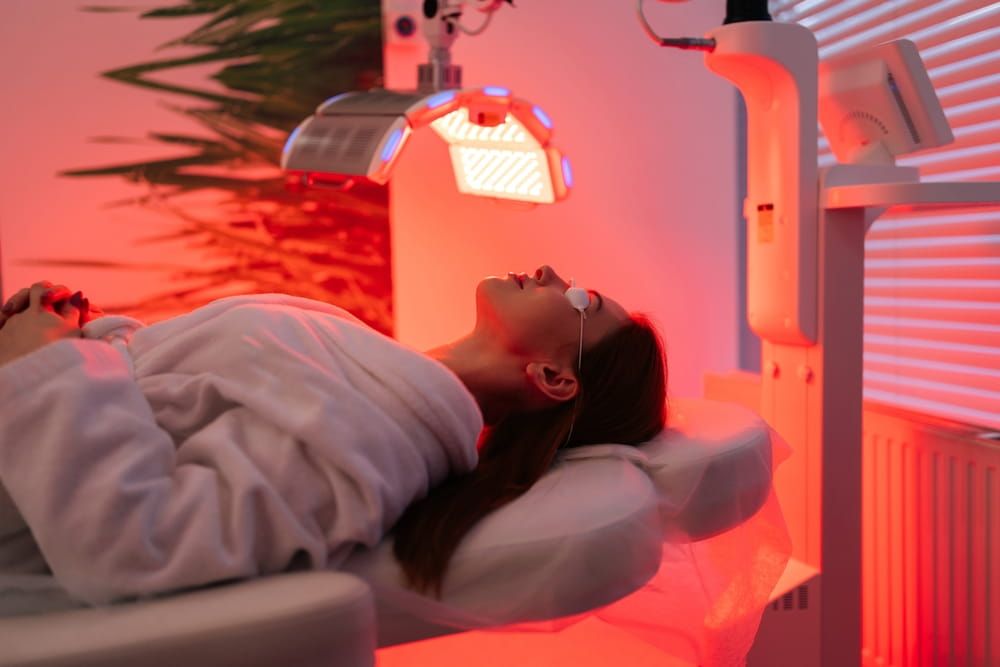
Cells require a steady supply of energy to maintain tissues, respond to physical stress, regulate inflammation, and support normal repair. When cells are injured or placed under prolonged strain, these energy demands may increase. Red light therapy, also known as photobiomodulation, uses specific wavelengths of red or near-infrared light to influence cellular activity without cutting, burning, or intentionally damaging tissue. Axon Integrative Health shares this educational overview for people in Denver, Cherry Creek, Cherry Hills, Highlands, and Greenwood Village who are interested in understanding the relationship between light exposure and cellular healing.
The term “cellular healing” can be misleading when it is interpreted as an instant cure or complete regeneration of damaged tissue. Healing is a coordinated biological process involving energy production, immune signaling, circulation, collagen remodeling, and communication among many types of cells. Red light therapy is being studied for its ability to influence parts of this process, but its effects depend on the wavelength, dosage, treatment area, health condition, and characteristics of the individual receiving the light.
Photobiomodulation Uses Light Without Producing Tissue Damage
Red light therapy differs from ultraviolet exposure, surgical lasers, and heat-based procedures. Photobiomodulation typically uses low-intensity red and near-infrared wavelengths that can be delivered through light-emitting diodes or low-level lasers. The light is non-ionizing, meaning it does not carry enough energy to remove electrons from atoms or directly damage DNA in the way ionizing radiation can.
Visible red light is commonly used for more superficial tissues, while near-infrared wavelengths may penetrate farther beneath the skin. Penetration is still limited by factors such as skin pigmentation, tissue thickness, blood flow, wavelength, device power, and the distance between the device and the body. Light does not travel uniformly through every tissue, and deeper penetration does not necessarily mean a stronger or more useful biological effect.
Unlike treatments designed to destroy or remove tissue, photobiomodulation attempts to stimulate a cellular response using a controlled amount of energy. This distinction is important because the objective is modulation rather than forceful intervention. The cells must still have the biological capacity to respond, repair, and adapt.
Mitochondria Help Convert Light Into a Cellular Signal
Mitochondria are structures within cells that help convert nutrients and oxygen into adenosine triphosphate, or ATP. ATP provides usable energy for processes such as muscle contraction, nerve signaling, protein production, membrane transport, and tissue repair. For this reason, mitochondria are often described as the energy-producing centers of the cell.
One proposed mechanism of photobiomodulation involves cytochrome c oxidase, an enzyme within the mitochondrial respiratory chain. Certain red and near-infrared wavelengths may be absorbed by this and other cellular photoacceptors. This interaction may influence electron transport, oxygen use, and mitochondrial membrane activity, leading to changes in ATP production and cellular signaling.
The biological response involves more than simply producing additional energy. Light exposure may also create temporary changes in reactive oxygen species and nitric oxide signaling. In carefully regulated amounts, these molecules can act as messengers that influence gene expression, circulation, antioxidant defenses, and the cellular stress response. Too much oxidative stress can damage cells, but small and controlled signaling changes may help cells adapt to physical demands.
Cellular Energy Supports the Repair Process
Tissue repair is an active process that requires energy. Following an injury, immune cells travel to the affected area, damaged material is removed, new proteins are produced, blood vessels may be remodeled, and cells begin rebuilding the extracellular structures that support the tissue. ATP is needed throughout these stages.
Research suggests that photobiomodulation may influence fibroblasts, immune cells, endothelial cells, muscle cells, and other cell types involved in repair. Fibroblasts are particularly important because they help produce collagen and other components of the extracellular matrix. Collagen provides structural support for skin, tendons, ligaments, and connective tissues, although healthy healing also requires the collagen fibers to be organized according to the demands placed on the tissue.
Red light exposure cannot replace the mechanical loading, nutrition, circulation, sleep, and time required for tissue remodeling. A tendon, muscle, or ligament must gradually regain its capacity to tolerate movement and force. For this reason, light-based strategies are often discussed alongside rehabilitation concepts such as corrective exercise in Denver rather than as substitutes for movement-based recovery.
Inflammation Is Part of Healing but Must Be Regulated
Inflammation is not automatically harmful. It is an essential part of the body’s response to injury, infection, and cellular stress. Inflammatory signaling recruits immune cells, helps remove damaged tissue, and initiates repair. Problems may arise when inflammation becomes excessive, prolonged, or poorly regulated.
Photobiomodulation has been studied for its potential effects on inflammatory mediators, oxidative stress, and immune-cell behavior. The response appears to depend heavily on the dose and treatment context. A properly selected exposure may help shift inflammatory activity toward a more balanced state, while an unsuitable dose may produce little benefit. Researchers often describe this as a biphasic dose response: more light does not necessarily create a better result.
This dosage principle is one of the most important distinctions between clinical photobiomodulation and casual exposure to a consumer device. Wavelength, irradiance, total energy, pulse pattern, treatment duration, and frequency all affect the amount of light reaching the tissue. Two devices marketed as red light therapy may therefore produce substantially different biological exposures.
Circulation and Oxygen Delivery Influence Cellular Recovery
Cells need oxygen and nutrients to generate energy and rebuild tissue. Blood flow also helps remove metabolic byproducts and transport immune cells to areas experiencing stress or injury. One proposed effect of red and near-infrared light involves nitric oxide, a signaling molecule that participates in blood-vessel relaxation and circulation.
Changes in local microcirculation may support the delivery of oxygen and nutrients to superficial tissues. However, improved blood flow should not be interpreted as proof that a damaged structure has fully healed. Circulation is only one part of a larger repair process that also involves tissue organization, strength, coordination, and tolerance to physical load.
Muscles and connective tissues may remain sensitive or restricted because of altered movement patterns, scar formation, nerve irritation, or repeated mechanical stress. Educational information about muscle release in Denver provides additional context for how soft-tissue concerns may involve both cellular and mechanical factors.
Red Light May Affect Nerve and Muscle Function
Nerve cells have substantial energy requirements because they must maintain electrical gradients and transmit signals over long distances. Researchers are examining whether photobiomodulation may influence nerve-cell metabolism, oxidative stress, inflammatory activity, and resilience following certain types of injury. Much of this research remains experimental, and findings from laboratory or animal studies cannot automatically be applied to every neurological condition.
Photobiomodulation has also been studied in relation to muscle performance, exercise recovery, and fatigue. Some research suggests possible effects on muscle metabolism or post-exercise soreness, but treatment protocols vary widely. Differences in wavelength, dosage, timing, and study design make it difficult to identify one approach that is appropriate for every person or activity.
Cellular support does not eliminate the need to examine how a person moves. Weakness, poor coordination, limited joint mobility, and inefficient movement patterns may continue placing stress on tissue even when cellular conditions are favorable. A functional movement assessment in Denver can help explain the broader relationship among mobility, stability, coordination, and physical strain.
Treatment Parameters Shape the Biological Response
The effectiveness of photobiomodulation depends on delivering an appropriate amount of light to the intended tissue. A dose that is too low may not produce a meaningful response, while a dose that is too high may reduce the desired effect. Treatment frequency also matters because cells require time to respond to stimulation.
Device output should not be evaluated solely by brightness. Important characteristics include wavelength, irradiance, treatment distance, beam area, pulse settings, and total energy delivered. Marketing terms such as “medical grade” do not, by themselves, confirm that a device has been studied for a particular condition.
Eye protection may be needed depending on the device and treatment area. Light should not be directed into the eyes unless the equipment and protocol are specifically designed for that purpose under qualified supervision. People with photosensitivity, active medical conditions, a history of certain cancers, or medications that increase sensitivity to light should seek individualized guidance before use.
Cellular Healing Requires More Than One Input
Red light therapy is best understood as a form of biological stimulation rather than a stand-alone cure. It may influence mitochondrial activity, cellular signaling, inflammatory regulation, and circulation, but healing still depends on the nature of the injury and the health of the surrounding tissue. Nutrition, sleep, movement, stress, underlying disease, medication use, and repeated physical demands can all affect the outcome.
The scientific literature surrounding photobiomodulation continues to grow, yet evidence is not equally strong for every proposed application. Treatment results may also vary because protocols have not been standardized across all devices and conditions. Claims that red light can regenerate any tissue, reverse every disease, or replace necessary medical care go beyond the available evidence.
Learning how cells use light provides a useful window into the complexity of human recovery. Axon Integrative Health offers this educational information to help communities in Denver, Cherry Creek, Cherry Hills, Highlands, and Greenwood Village better understand how red light therapy may interact with cellular energy and the body’s natural repair processes.
Resources
Dompe, C., Moncrieff, L., Matys, J., Grzech-Leśniak, K., Kocherova, I., Bryja, A., Bruska, M., Dominiak, M., Mozdziak, P., Skiba, T. H. I., Shibli, J. A., Angelova Volponi, A., Kempisty, B., & Dyszkiewicz-Konwińska, M. (2020). Photobiomodulation—Underlying Mechanism and Clinical Applications. Journal of Clinical Medicine.
Glass, G. E. (2021). Photobiomodulation: The Clinical Applications of Low-Level Light Therapy. Aesthetic Surgery Journal.
Hamblin, M. R. (2018). Mechanisms and Mitochondrial Redox Signaling in Photobiomodulation. Photochemistry and Photobiology.