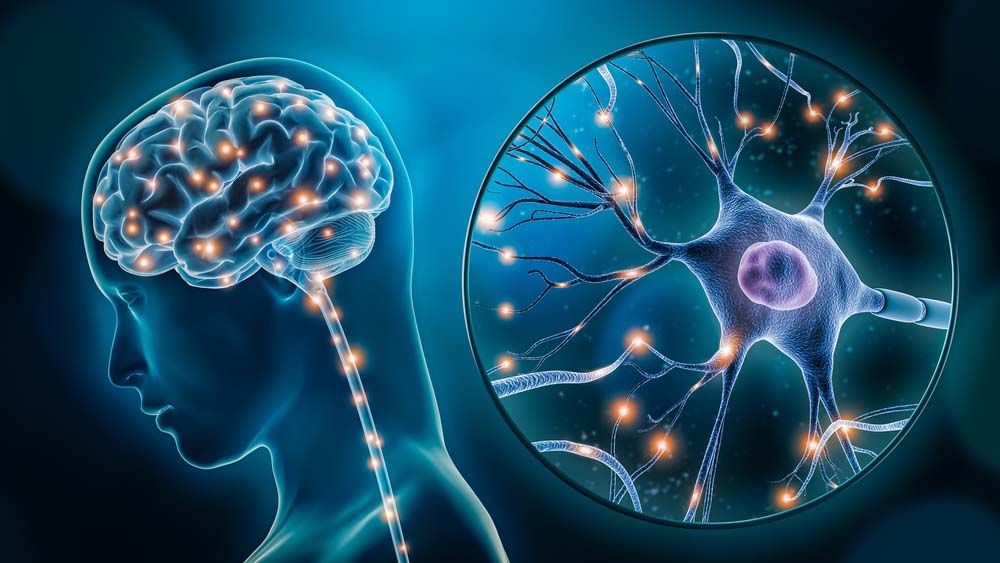

Functional Neurological Disorder can be confusing.
A person may experience real and sometimes disabling neurological symptoms even when conventional imaging doesn’t show structural damage that explains those symptoms.
That does not mean the symptoms are imaginary.
They are real.
The problem is often one of how the nervous system is functioning and communicating, rather than simply where there is structural damage.
At Axon Integrative Health in Denver, we think about FND as an opportunity to help the brain and body reconnect and relearn.
What Is Functional Neurological Disorder?
FND can cause symptoms such as:
- Abnormal movement
- Tremors
- Weakness
- Gait problems
- Dystonia
- Seizure-like episodes
- Sensory changes
- Speech difficulties
- Functional vision symptoms
Symptoms vary considerably between individuals.
FND is a genuine neurological disorder and should be evaluated and diagnosed appropriately by qualified clinicians.
The Brain-Body Disconnect
Your brain constantly receives information from your body.
It monitors:
- Movement
- Position
- Breathing
- Heart rate
- Internal sensations
- Touch
- Pain
- Balance
The brain then uses this information to predict and control what happens next.
When the communication between prediction, sensation, attention, and movement becomes disrupted, the brain can develop maladaptive patterns.
The good news?
The nervous system is plastic.
That means it can learn.
And if the nervous system can learn maladaptive patterns, it can potentially learn more adaptive ones.
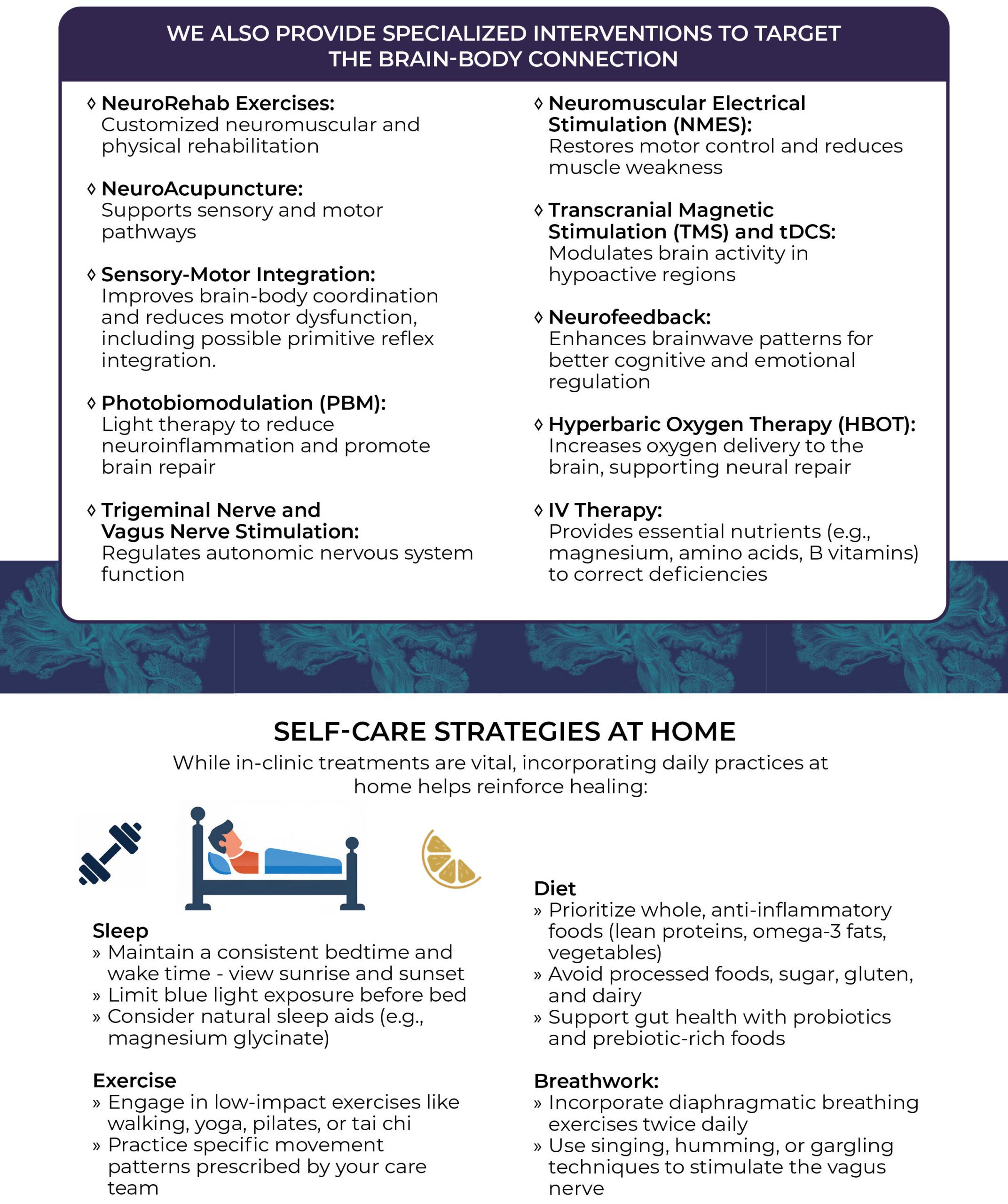
Reconnecting Through Breath
Breathing is one of the simplest ways to influence the relationship between the brain and body.
Breathwork can provide information to the brain about:
- Internal state
- Rhythm
- Autonomic activity
- Safety
- Attention
- Body awareness
The goal isn’t simply to “relax.”
It’s to re-establish communication between conscious attention and physiological state.
Somatic and Energy-Based Approaches
FND often involves altered awareness of bodily sensations.
Somatic approaches can help patients develop a healthier relationship with internal sensations and movement.
At Axon, we may incorporate body-based strategies, breathwork, sensory stimulation, and other approaches designed to improve awareness and regulation.
Functional Neurorehabilitation
Traditional rehabilitation often focuses on strengthening a weak muscle.
FND rehabilitation may require something different.
We want to retrain the brain’s movement programs and sensory predictions.
This can include:
- Motor retraining
- Coordination
- Balance
- Sensory integration
- Visual-motor training
- Dual-task training
- Rhythmic movement
- Cognitive-motor exercises
Neurotechnology
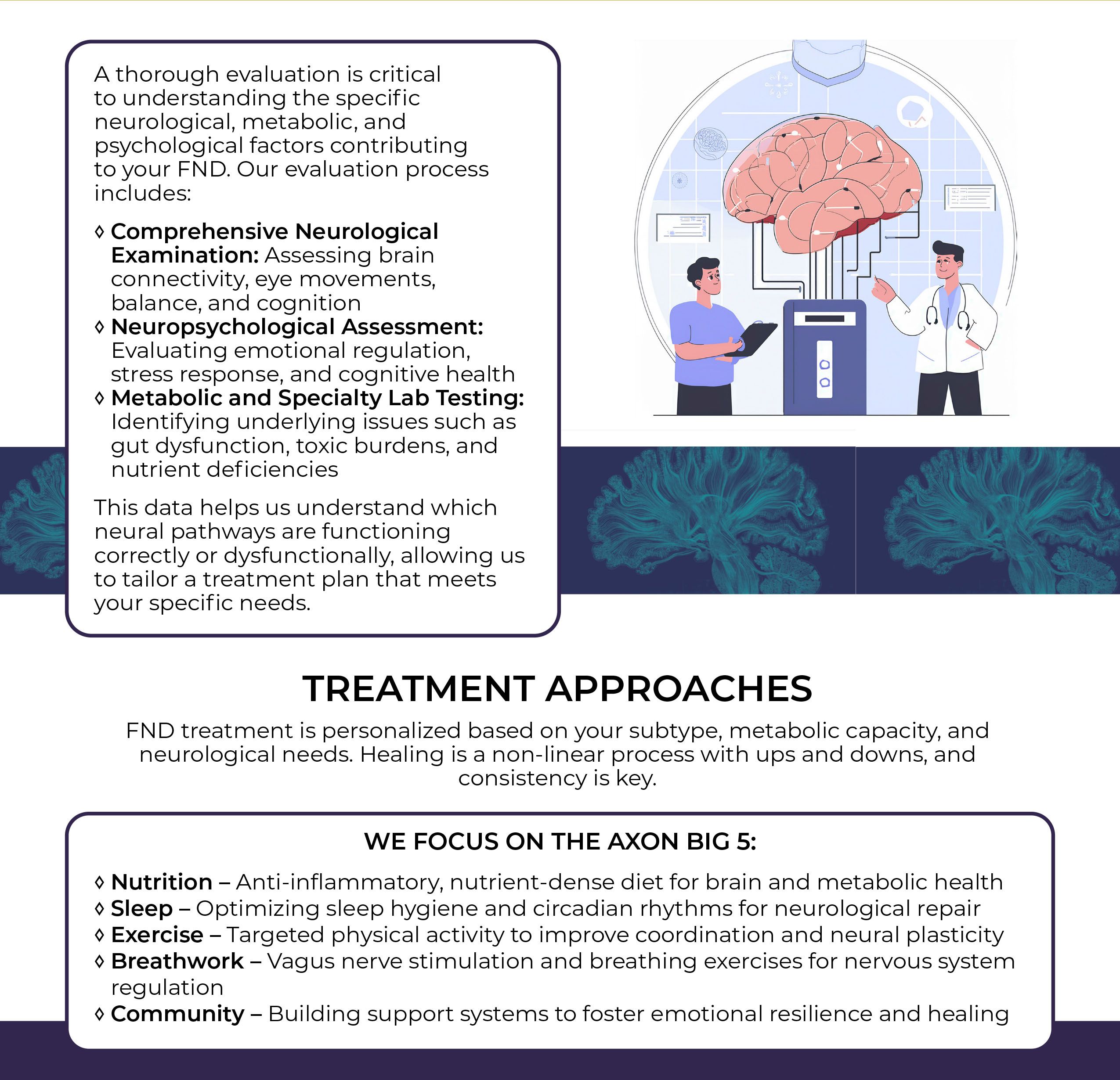
Depending on the individual, Axon may incorporate:
TMS
TMS can modulate neural activity and may be incorporated into an individualized neurorehabilitation strategy.
Neurofeedback
Neurofeedback provides feedback about brain activity and may help patients practice aspects of self-regulation.
Acupuncture
Acupuncture can provide sensory input to the nervous system and may be useful as part of a multimodal rehabilitation approach.
EmSculpt Neo
Neuromuscular stimulation and muscle activation can sometimes be incorporated into rehabilitation to provide additional sensory and motor feedback to the brain-body system.
The Goal Is Relearning
The most important concept is this:
We don’t want to spend all of our time fighting symptoms.
We want to teach the nervous system a different way to function.
That requires repetition.
Practice.
Novel sensory input.
Movement.
Breathing.
Attention.
And, most importantly, confidence in the body’s ability to change.
Frequently Asked Questions
Is FND psychological?
FND is a neurological disorder. Psychological factors can influence symptoms, but FND should not be dismissed as imaginary or simply “all in your head.”
Can FND improve?
Yes. Many patients can improve with appropriate diagnosis, education, and specialized rehabilitation.
What treatments are used for FND?
Treatment can include specialized physical therapy, occupational therapy, speech therapy, psychological support when appropriate, and neurological rehabilitation.
Can neurofeedback help FND?
Neurofeedback may be used as an adjunctive tool for nervous system regulation, although evidence varies and it should be individualized.
How does Axon approach FND?
We focus on brain-body communication, functional neurological rehabilitation, autonomic regulation, sensory integration, movement retraining, and individualized neurotechnology.