
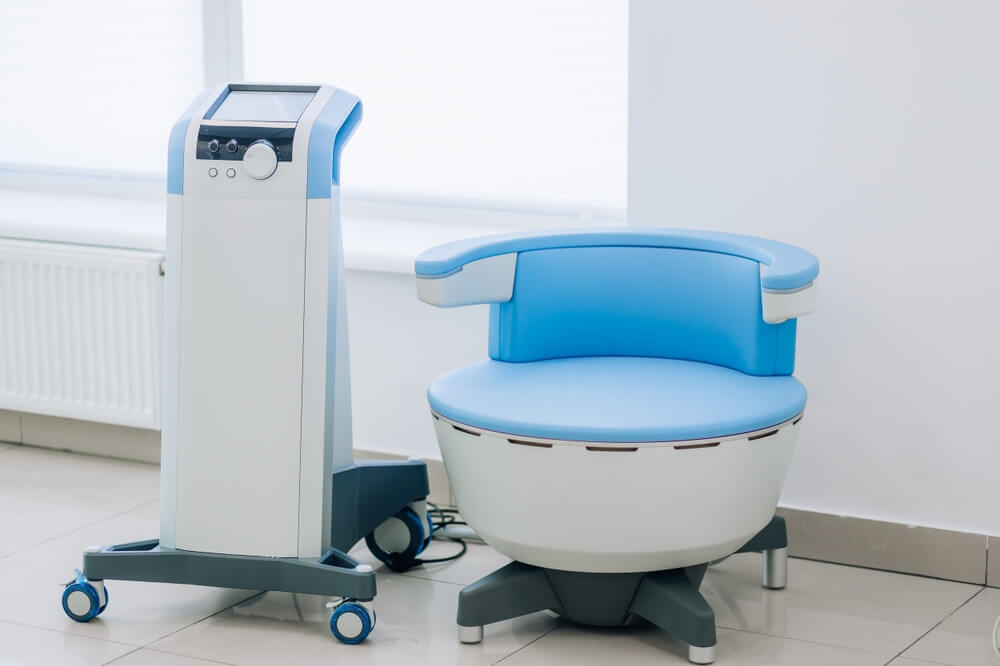
A Breakthrough Approach to Pelvic Health
Pelvic floor dysfunction is far more common than most people realize—and it affects both men and women.
Emsella is a non-invasive technology that may support:
- Pelvic floor strength
- Bladder control
- Sexual function
- Core stability
At Axon Integrative Health in Denver, we integrate Emsella into a broader functional and neurological approach to pelvic health and performance.
What Is Emsella?
Emsella uses HIFEM technology to stimulate deep pelvic floor muscles.
A single session can deliver thousands of muscle contractions, which may:
- Strengthen pelvic floor muscles
- Improve neuromuscular control
- Enhance circulation
Pelvic Floor Therapy Without Discomfort
Traditional pelvic floor therapy can be:
- Time-intensive
- Invasive
- Difficult to perform correctly
Emsella offers a fully clothed, non-invasive alternative that may support:
- Muscle strengthening
- Improved coordination
- Better awareness of pelvic activation
Bladder Control and Core Stability
Pelvic floor weakness is often linked to:
- Urinary leakage
- Core instability
- Postural issues
Emsella may support:
- Improved bladder control
- Increased pelvic stability
- Better integration with core musculature
Sexual Wellness and Performance
Pelvic floor function plays a major role in sexual health.
Emsella may support:
- Increased blood flow
- Improved muscle tone
- Enhanced sensation and responsiveness
For women, this may contribute to improved sexual wellness and confidence.
Emsella for Men: ED and Performance Support
For men, pelvic floor strength is closely tied to performance.
Emsella may support:
- Improved circulation
- Pelvic muscle strength
- Erectile function support
- Performance confidence
At Axon, this is often combined with:
- Shockwave therapy
- Metabolic optimization
- Hormonal support strategies
Postpartum and Recovery Support
After pregnancy, many women experience pelvic floor changes.
Emsella may support:
- Recovery of muscle tone
- Core reintegration
- Stability and control
Neurological and Functional Integration
Pelvic floor function is deeply connected to the nervous system.
Emsella may support:
- Brain-pelvic communication
- Autonomic regulation
- Coordination with breathing and movement
This is particularly important for patients dealing with:
- Chronic stress
- Nervous system dysregulation
- Functional movement issues
Why Choose Axon for Emsella in Denver?
At Axon, we don’t isolate pelvic health—we integrate it into:
- Full-body movement systems
- Neurological function
- Hormonal and metabolic health
- Performance optimization
This creates a more complete and effective approach.
Who May Benefit?
Emsella may be helpful if you:
- Experience bladder leakage
- Want to improve pelvic strength
- Are looking to enhance sexual wellness
- Are recovering postpartum
- Want better core stability and control
Emsella in Denver: Take Control of Your Pelvic Health
Pelvic health is foundational to performance, confidence, and long-term function.
Emsella offers a modern, non-invasive way to support that system, especially when integrated into a comprehensive care plan.